Category: North York Moors
-
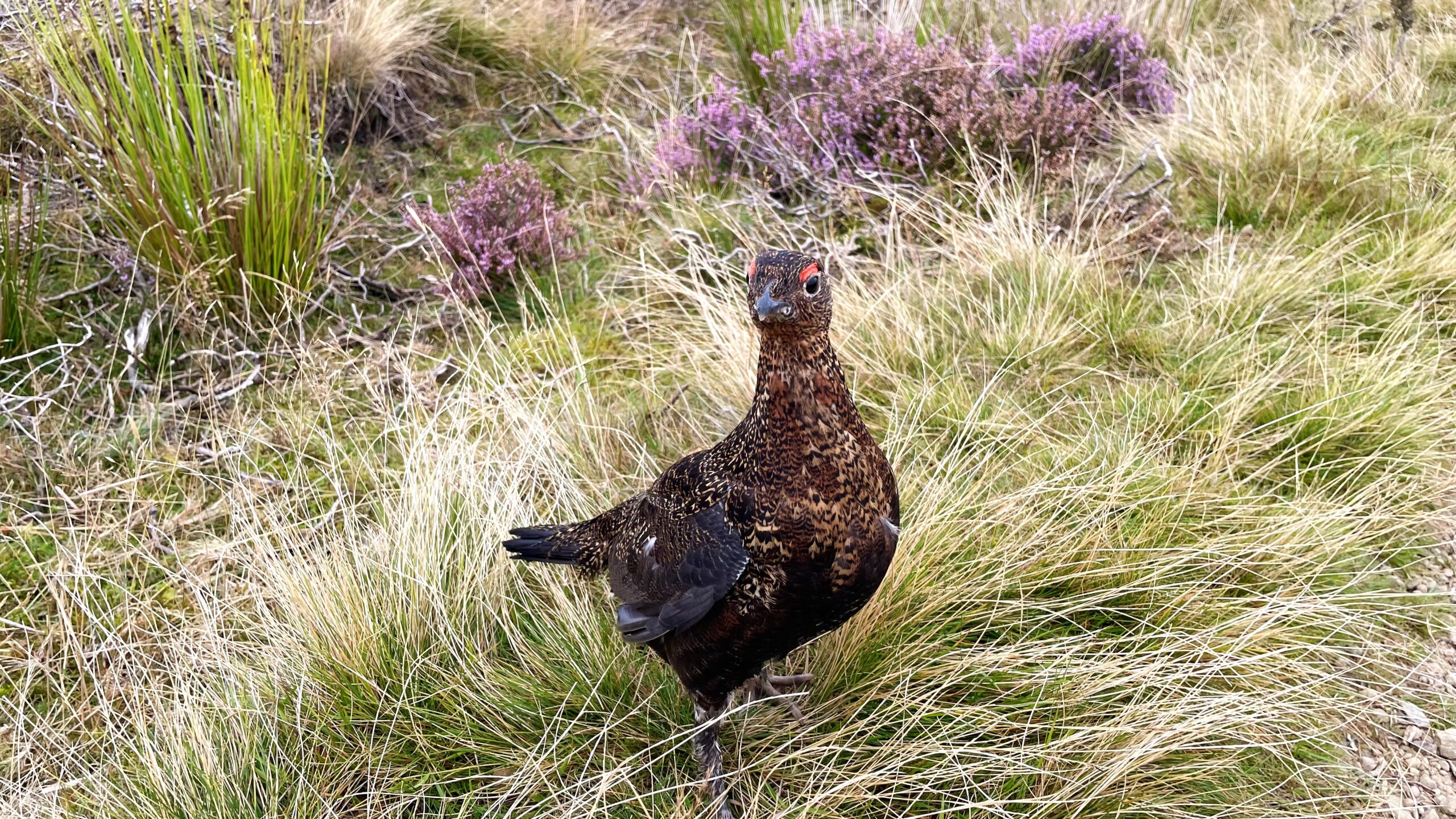
Guardian of the Cleveland Way
Had those two ominous notes from Jaws been playing in my earphones, I might have sensed what was coming. Just two notes, faster and faster, the sound of danger creeping closer. This red grouse appeared on the Cleveland Way path over Carr Ridge, no more than ten metres away, a plump silhouette against the heather.…
-
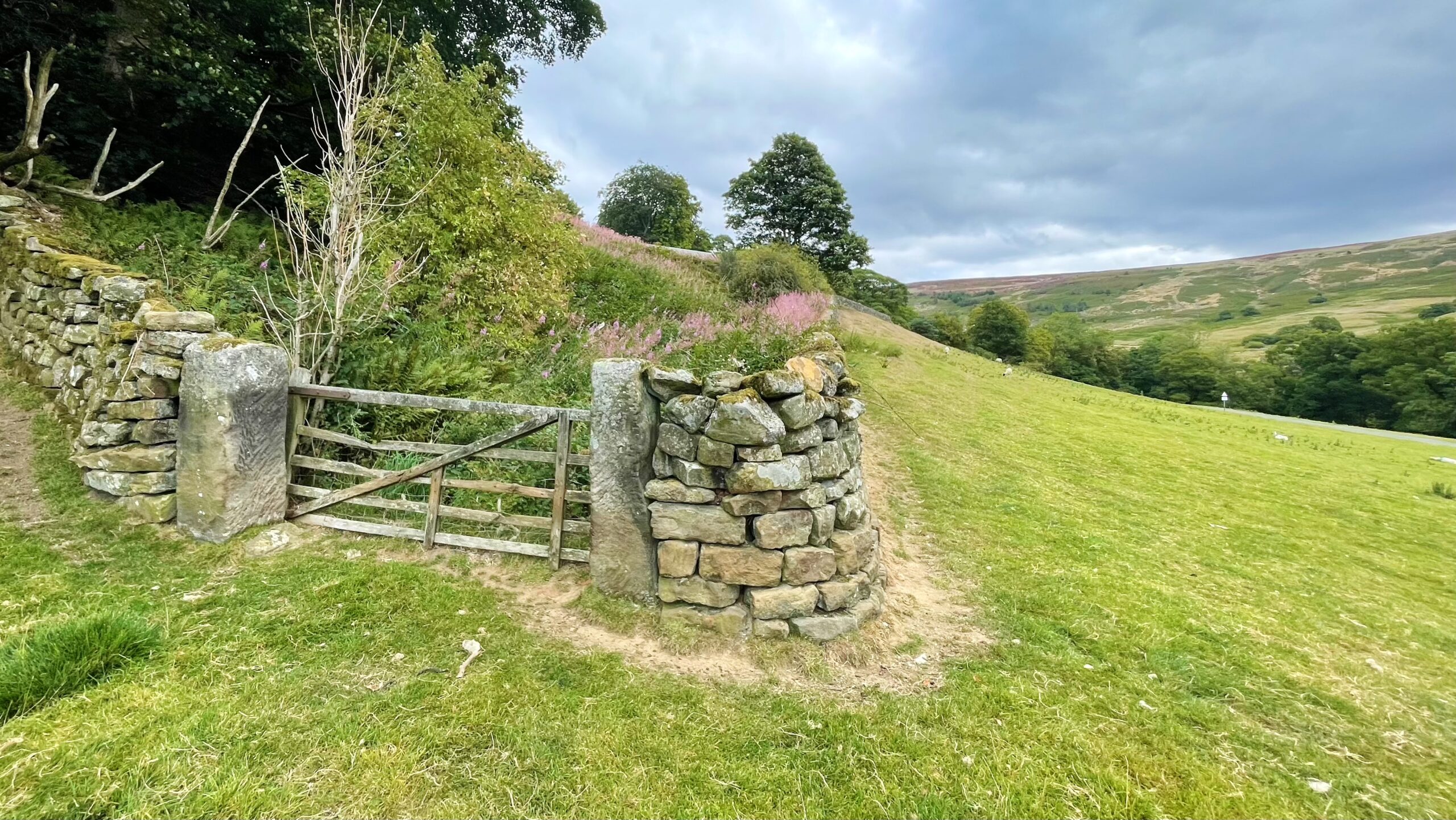
The Long Lost Way to Cockayne
At first glance, it is nothing remarkable: a pair of stone gate stoops, standing quietly beside a graceful curve in a dry-stone wall, just south-west of Cockayne Church. But ignore the leaning wooden 5-bar gate secured by baling twine, and a closer look tells a different story. These are no rough farm gateposts. Each is…
-

Westerdale: From Templars to Ironmasters
A rare chance the other night to climb Top End, the nose of the rigg that leads up to Young Ralph’s Cross. Usually I pass this way in a rush—driving, or sometimes cycling—keen not to lose momentum on the steep bank. Below me lies Westerdale, so named for its place as the westernmost dale in…
-

Purple Heather, Brown Truth
The ling, or common heather, has reached its peak bloom just days before the start of the grouse shooting season — the annual spectacle in which profit and sport take precedence over the land itself. This year, the display is patchy. Whole swathes have turned a brittle reddish-brown, appearing dead but showing faint signs of…
-

Gower Dale: Where a Railway Never Came
This is Gower Dale in the Hambleton Hills. On the far left stands the ruined shell of Gowerdale House. Rising in the centre distance is Hawnby Hill. A tranquil landscape, untouched by the grime and noise of industry. It could have been very different, had Victorian ambition not faltered. On Thursday, 19 May 1853, amid…
-

Bridestones Moor: The Burden of an Ancient Earthwork
A return to Bridestones Moor for the annual task of clearing the Scheduled Ancient Monument — the prehistoric dyke — of bracken and self-seeded saplings. Without this, roots and undergrowth would soon begin to damage what little remains of it. The dyke, a double bank and ditch nearly a kilometre long, is thought to date…
-

The Bottomless, Town-Swallowing, Goose-Plucking Lake Gormire
Yorkshire is a county of myths, one of which insists it possesses only a single lake — Gormire. This is clearly absurd, yet it may simply be Yorkshire’s way of keeping a straight face while mocking outsiders, or perhaps a petty attempt to match the Lake District, which, as every schoolboy is told, also has…
-

Along the Old Hambleton Drove Road
Looking south along the old Hambleton Street drove road, the route from Yarm to York that stretches across the landscape. I have just cycled north along this track, though three hundred years ago I would have been met by an entirely different scene. Then, before the coming of the railways, the way would have been…
-

Clearing the Past: The Lost Drumhouse of Newton Wood
A morning with the National Trust, cutting back the summer growth from around the brick and stone remains known as the Kip, at the Cliff Rigg end of Newton Wood. The Kip is the remains of the head of a narrow-gauge tramway incline. Ore from Roseberry Ironstone Mine once hurtled down here under its own…
-

On this Day in 1974 — When Health & Safety Went Mad
Just over fifty years ago, in 1974, I was into my first year of full-time work. Newly settled in North Yorkshire, it may have been then that I first looked down the short, wide dale of Greenhowe, maybe from this very spot, perhaps at this very season, when the ling is beginning to flare into…