Category: Newton Wood
-
The Hidden Life of Newton Wood
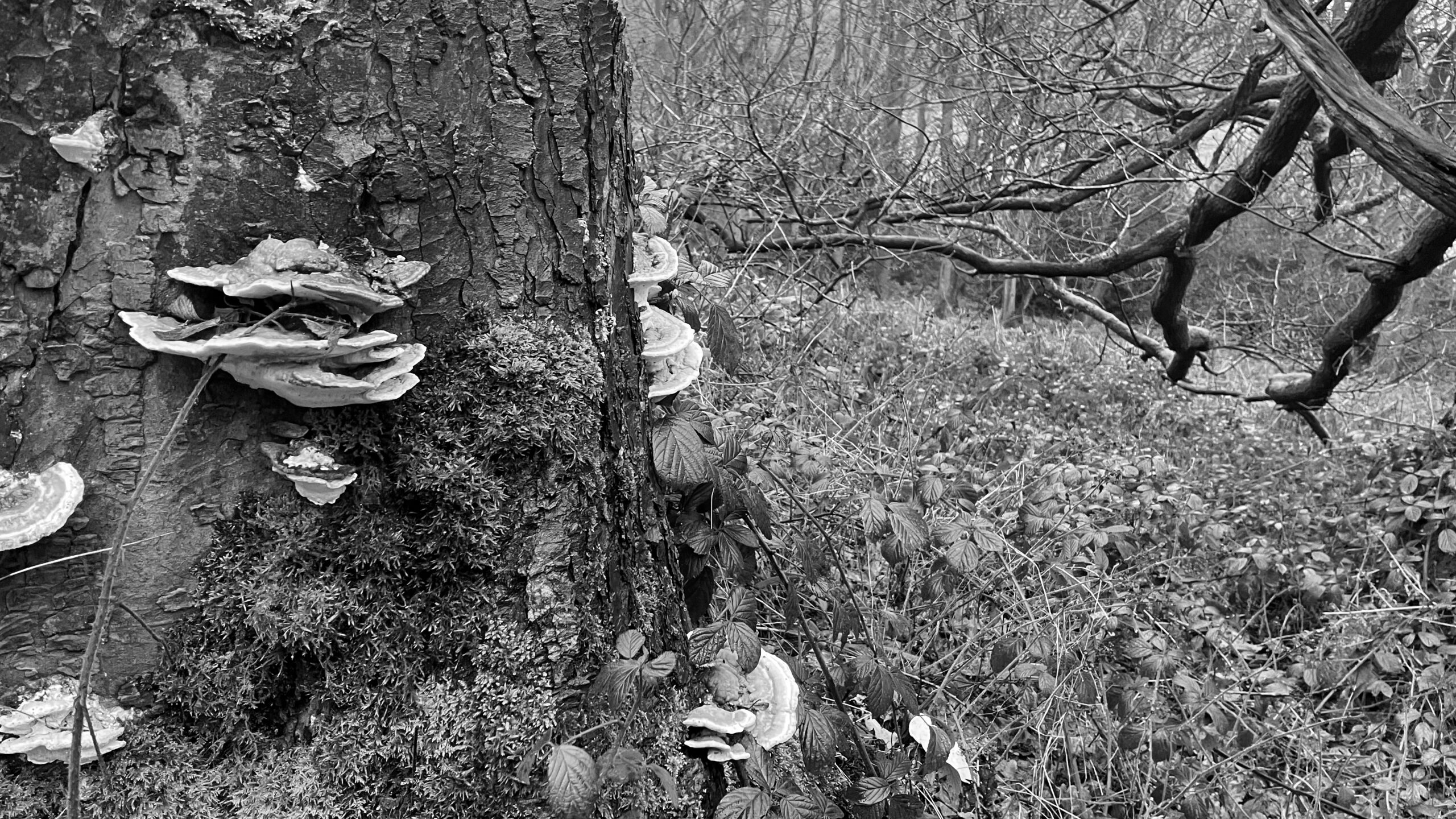
All was quiet in Newton Wood today. No leaves rustling, barely a bird bothering to sing. Colour drained away. Even the fungi looked as if they had clocked off. Appearances mislead. Fungi are like icebergs. What shows above ground, the mushrooms, is only the fruit. The real organism is the mycelium, a vast web beneath…
-
Newton Wood and the Afterlife of a Dying Ash
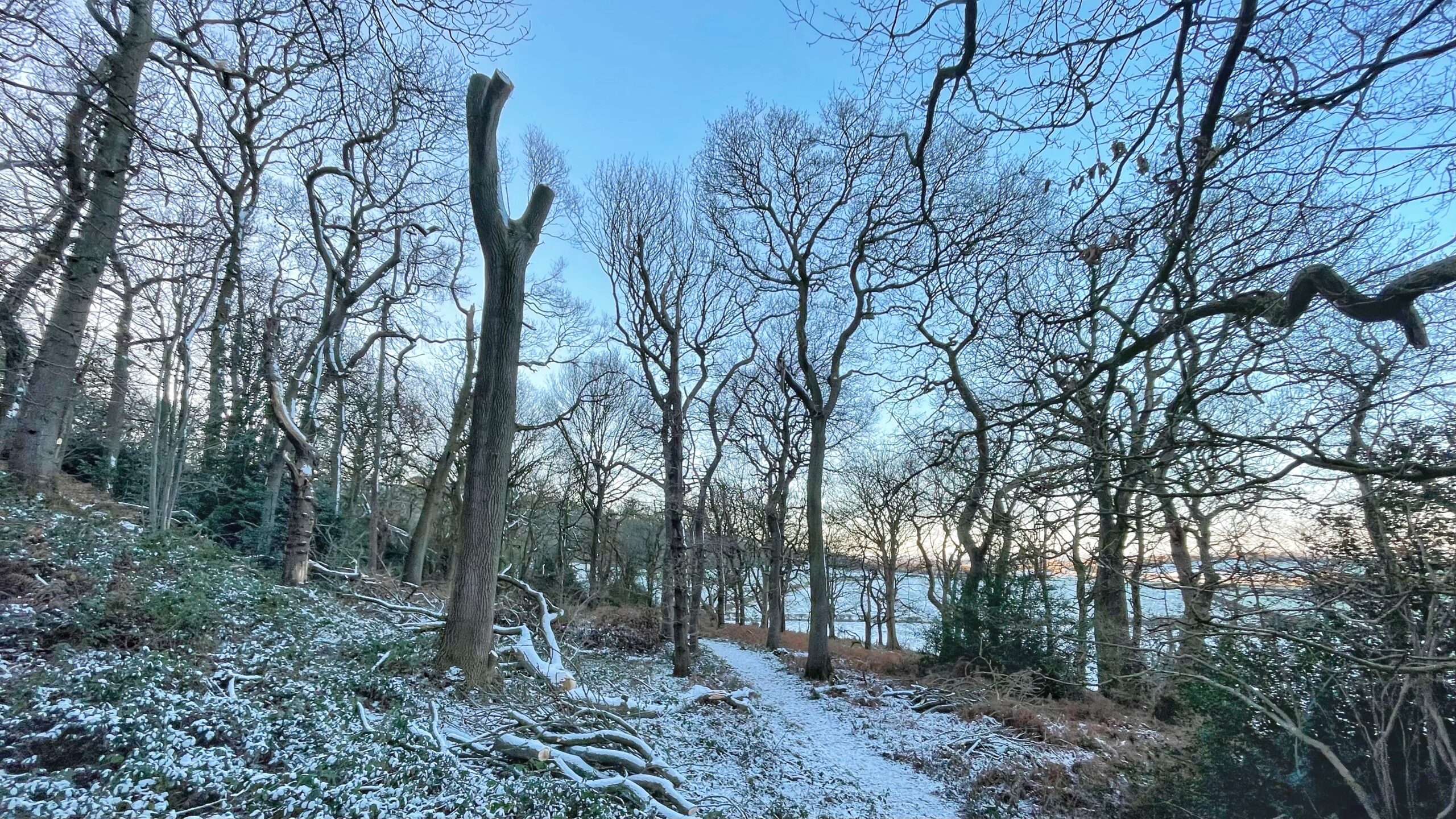
Just after dawn, Newton Wood sits under a light dusting of snow. The sky is a hard, clear blue. Bare deciduous trees stretch their thin arms upward, as if hoping for better weather later. Left of centre stands a prominent ash tree. Its trunk is tall and thick, brutally pruned and cut short. It looks…
-

Clearing the Past: The Lost Drumhouse of Newton Wood
A morning with the National Trust, cutting back the summer growth from around the brick and stone remains known as the Kip, at the Cliff Rigg end of Newton Wood. The Kip is the remains of the head of a narrow-gauge tramway incline. Ore from Roseberry Ironstone Mine once hurtled down here under its own…
-

What Stripped the Trees? A Woodland Whodunnit
Not my usual kind of post, but here is a photo from Newton Wood showing two oak trees standing side by side. The one on the left looks as it should in mid-June: full canopy, dense green. The one on the right, though, is barely clothed—just a sparse fringe of leaves at the crown, the…
-

Yorkshire’s Pride: The Enduring Allure of Roseberry Topping
It has been some time since I inflicted a post about Roseberry Topping upon the world, the conical-shaped hill that looms over this northeastern corner of what is the historical county of Yorkshire, albeit a recycling of previous posts. Local pride being what it is, they have long called it “t’ highest hill i’ all…
-

Roseberry’s Kissing Oaks
When two tree trunks or branches rub against one another long enough to wear away their bark and expose the cambium — the cellular plant tissue — they sometimes fuse into a single entity, forming what is charmingly called a natural graft. This process, termed “inosculation,” is derived from the Latin for “to kiss,” as…
-

Bracken, Oaks, and their Folklore
Bracken—our most invasive ground cover, steadily browning itself to perfection. How marvellously it complements this oak woodland on Cockle Scar, on the west-facing slope of Roseberry. Who needs daffodils or bluebells when you can have a decaying fern carpeting your view? And did you know that bracken is charmingly referred to as the ‘oak fern’? Apparently,…
-

Newton Wood’s Hidden Industrial Heritage
This morning’s low cloud cover meant there was no chance of capturing any stunning shots of the Cleveland Hills, so I turned my attention to something closer to the ground. Folk often ask me about this brick and concrete structure at the Cliff Rigg end of Newton Wood, recently cleared of bracken and brambles by…
-

Framing the Landscape — A Nine-Year Retrospective
Nine years. Nine long years in which the world has undergone remarkable transformations: Brexit, Covid, Ukraine, the rise and—let us hope—fall of Trump, and the conclusion of Tory turmoil. Yet, some constants endure. For nine years, “Framing the Landscape,” that quintessential piece of modern art, that obtrusive metallic eyesore placed in a nature reserve, has…
-

A Sea of Cotton on Newon Moor
One of the summer spectacles of acid bogs and wet heaths is the Common cottongrass, Eriophorum angustifolium. This plant, with its silky white seed-heads, creates a striking scene, whitening whole patches of bog. Beyond this visual charm, Cottongrass is rather unremarkable and underutilised. Efforts to produce usable thread from the seed-plumes have failed due to…