Category: Edinburgh
-
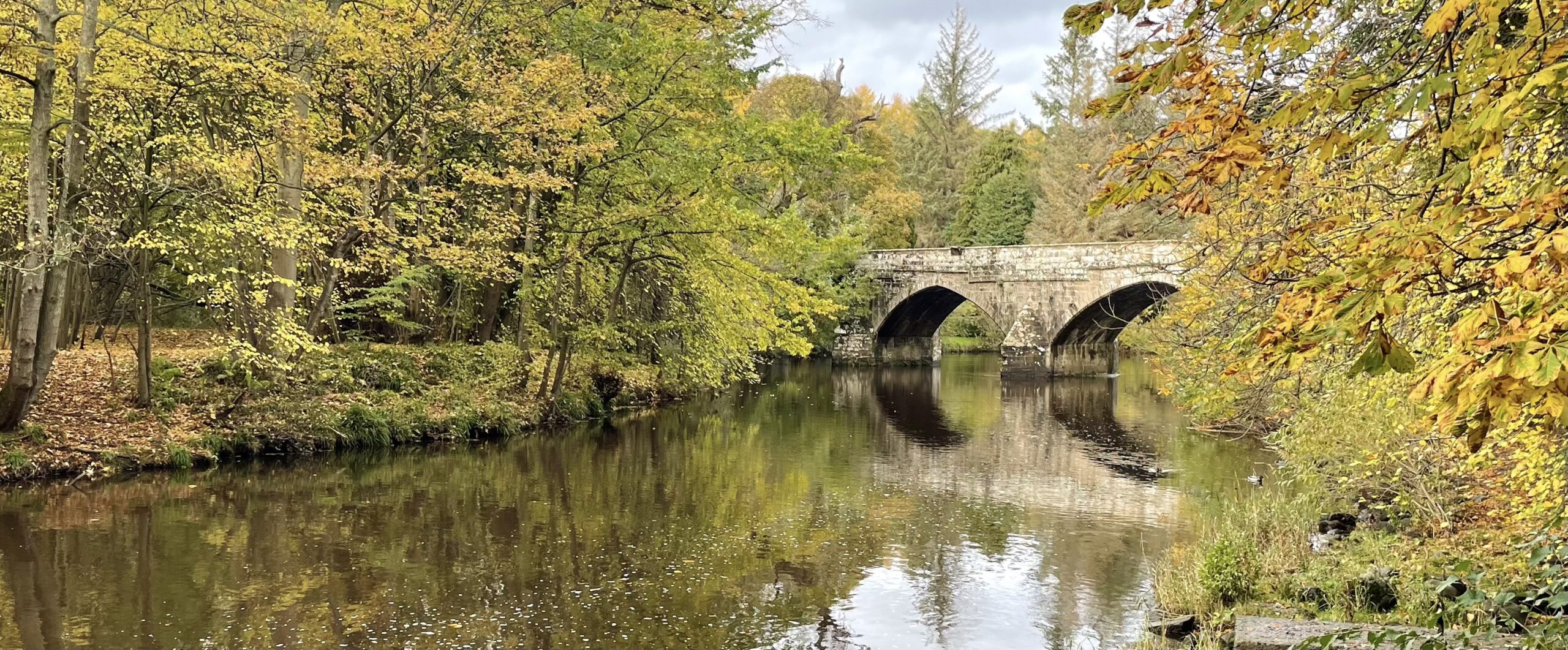
Cramond Brig: Where the King had a Narrow Escape
The River Almond begins its quiet journey in North Lanarkshire, winding eastwards until it slips, almost unnoticed, into the Firth of Forth at Cramond. But just before it meets the tide, the Almond performs one last act of theatre. Its course cuts through a steep, wooded gorge where oak, beech and sycamore crowd the banks,…
-
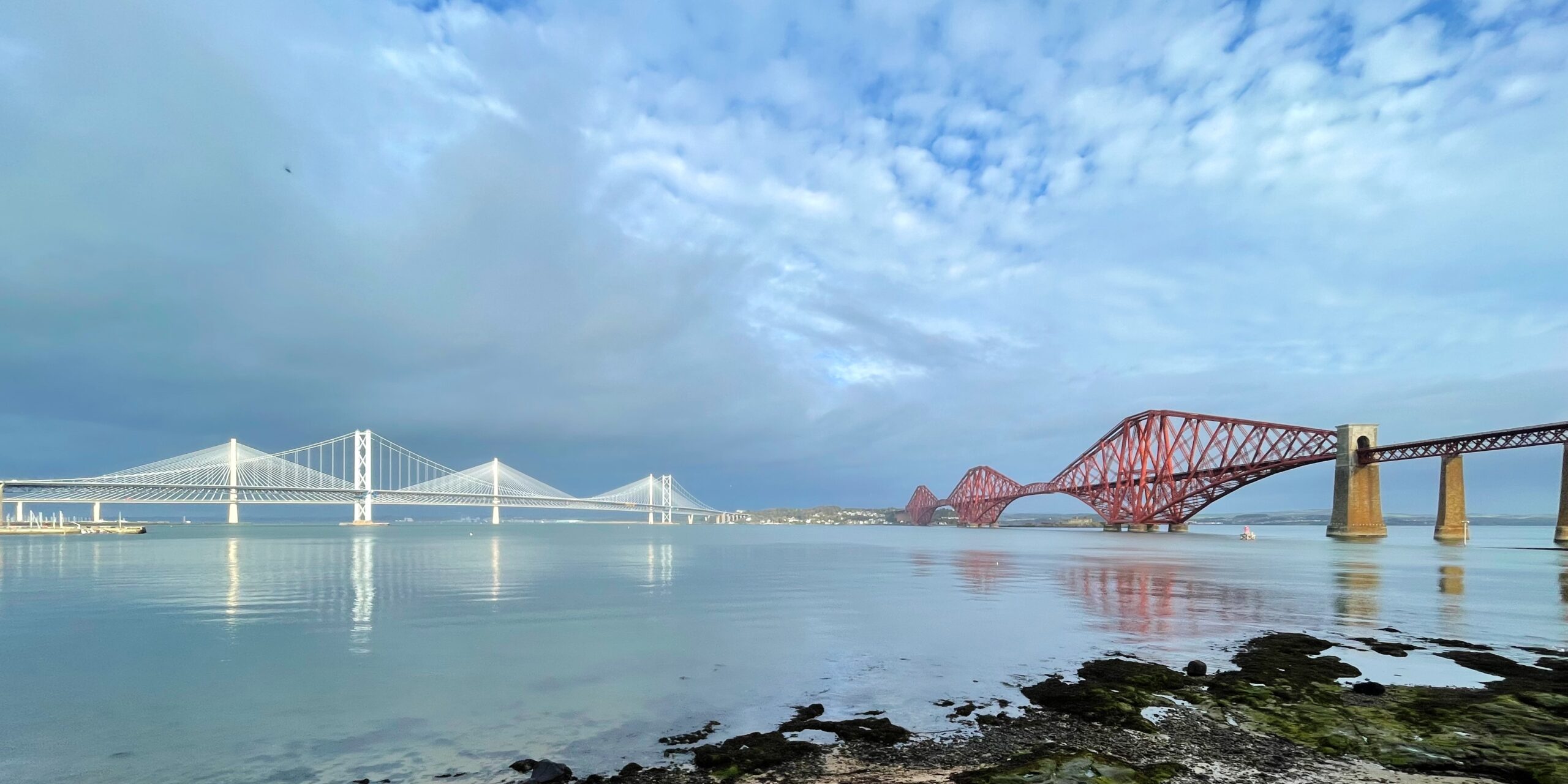
The Ferry That Time Forgot: Queen Margaret’s Gift to Travellers
A sweeping view of Scotland’s most iconic bridges, taken from the charming town of South Queensferry—a place where steel, stone, and centuries meet across the Firth of Forth. It is tempting to drift into the story of how these mighty spans were built, but today the real fascination lies not in iron and rivets, but…
-
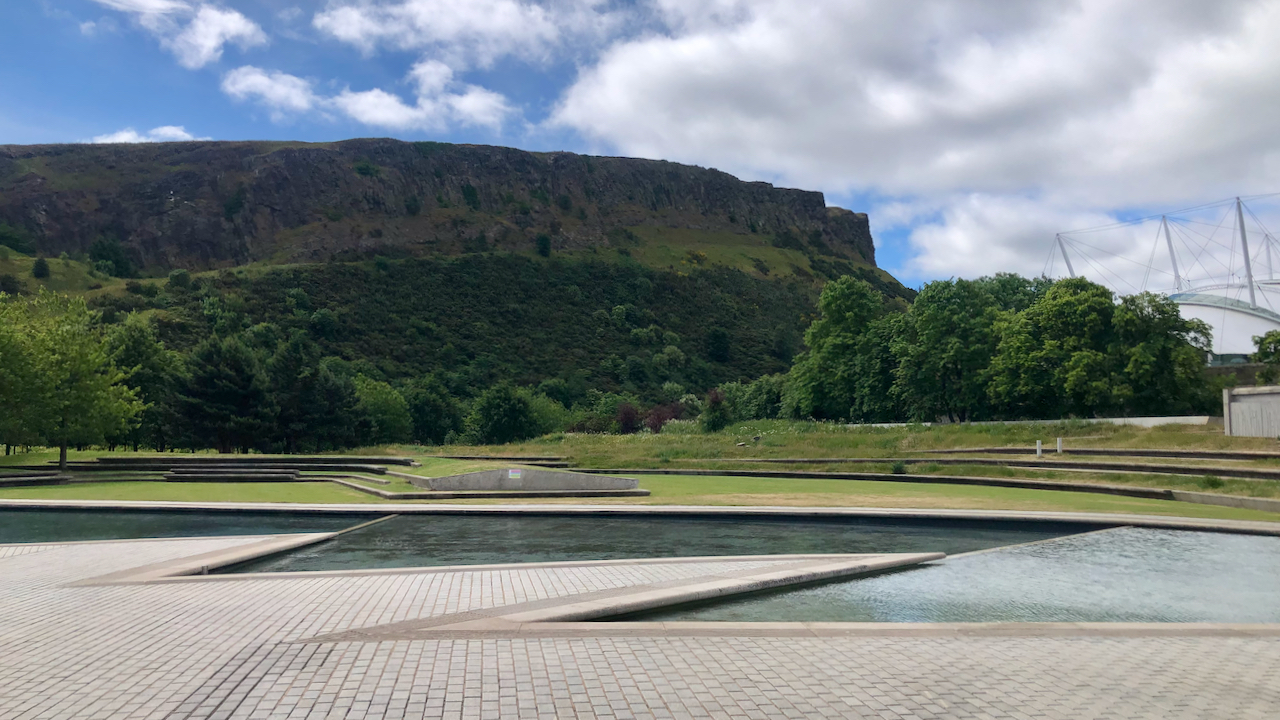
Salisbury Crags
A line of crags of igneous rock formed 342 million years ago, when lava erupted at Arthur’s Seat through the underlying sedimentary rock. The crags are famous in the world of geology because it is where James Hutton (1726 – 1797), ‘the father of modern geology‘, concluded that the magma intruding into the existing rock…
-
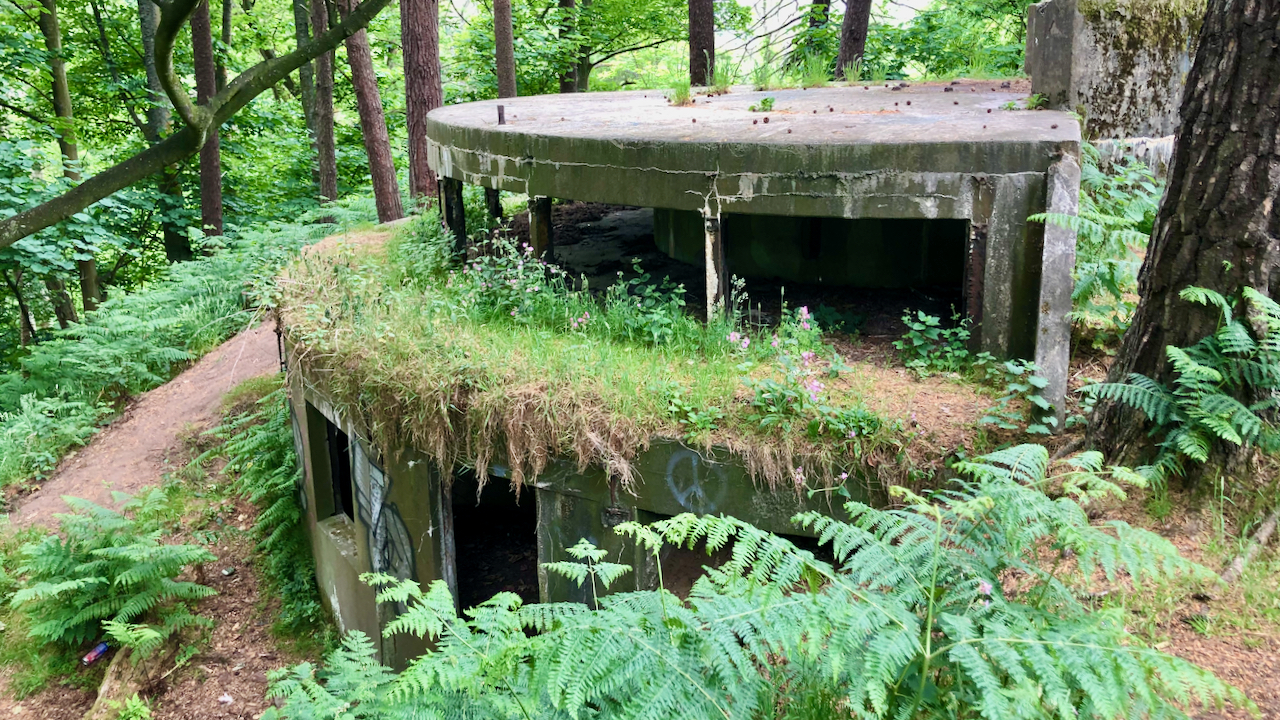
WW1 Gun Battery
I came across a ghostly complex of forgotten concrete structures whilst wandering through Dalmeny Park on the coast of the Firth of Forth near Edinburgh. It turns they are part of a gun battery built during the First World War to protect the Firth with its naval shipyards. Work on this battery actually began before…
-
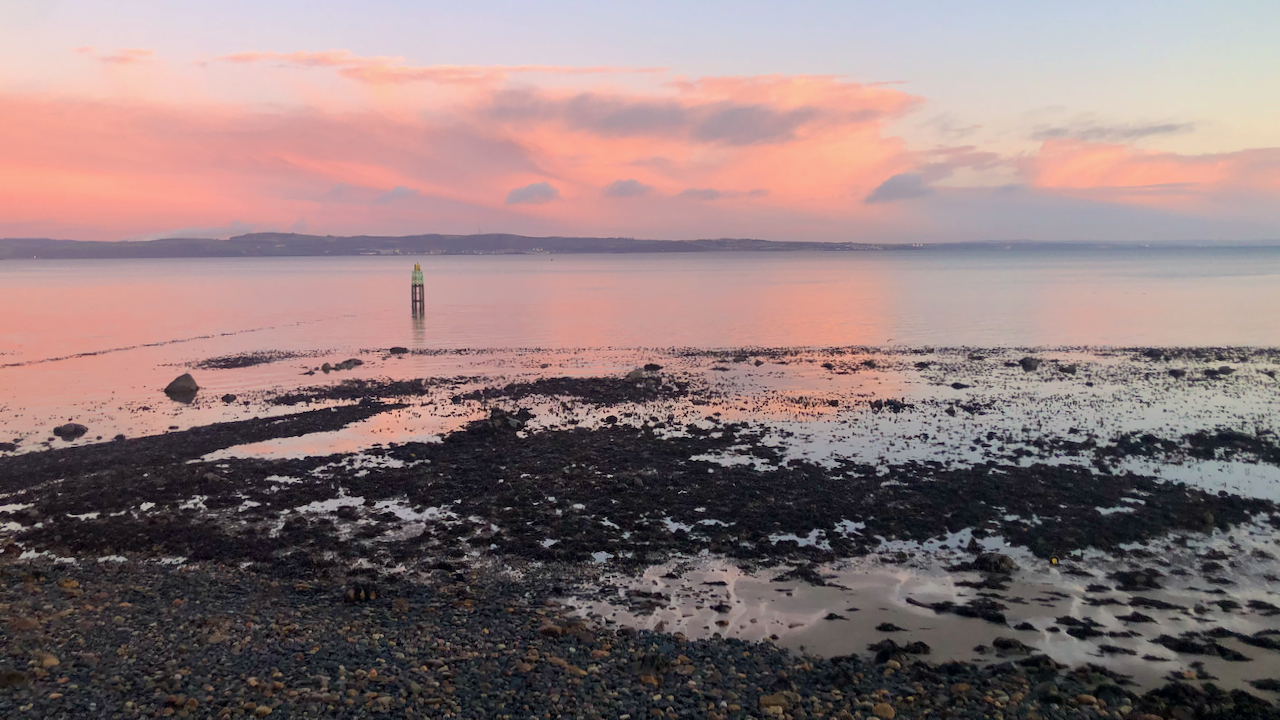
Wardie Bay
Lovely start to the morning across the Firth of Forth, but by the afternoon it was snowing in Edinburgh. Wardie Bay is sandwiched between the ports of Granton and Leith.
-
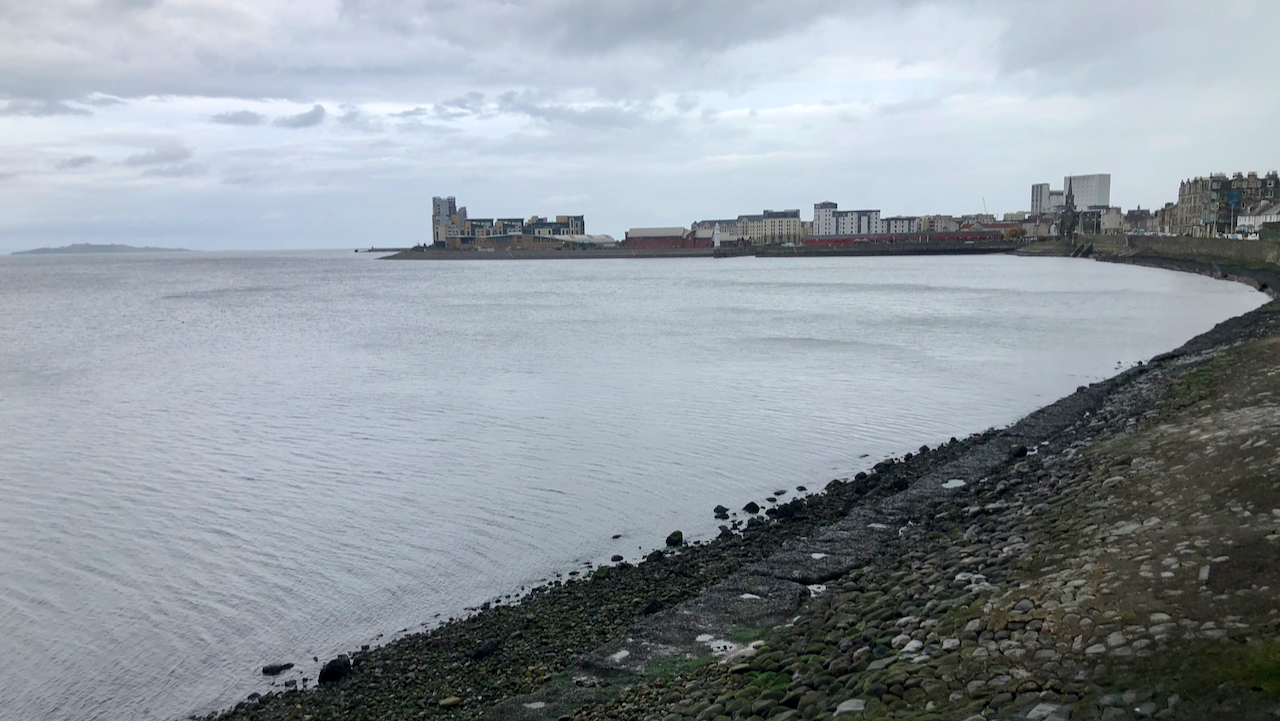
The Shellycoat of Leith
A few days in Leith on the outskirts of Edinburgh and a chance to look out for one of Scotland’s most elusive creatures. So elusive in fact that one long term resident of Leith had never heard of the town’s watery inhabitant. Walter Scott wrote about the Shellycoat in his 1802 book ‘Ministrelsy of the…
-
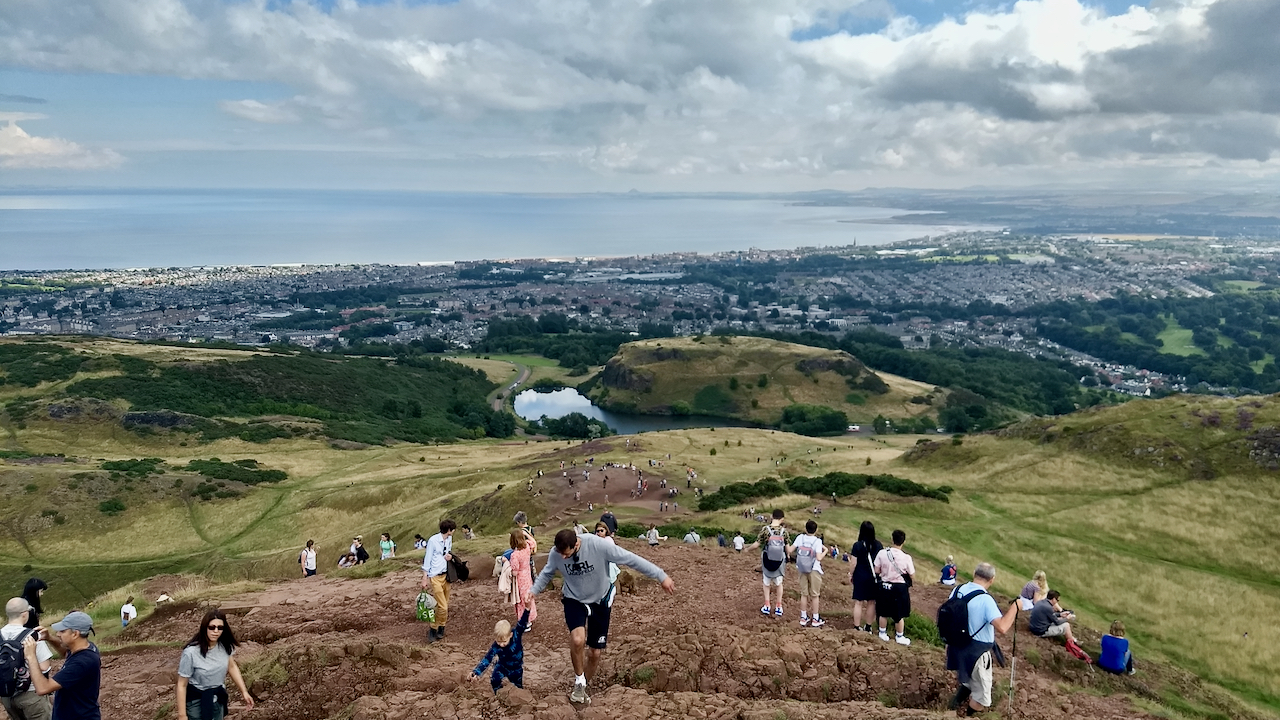
Arthur’s Seat
I think half of Edinburgh must have been up Arthur’s Seat today, a hill described by Robert Louis Stevenson as “a hill for magnitude, a mountain in virtue of its bold design.” The poor old King of Britain asleep in the depths of the extinct 250-metre high volcano must have been turning in his glass…