Author: Fhithich
-
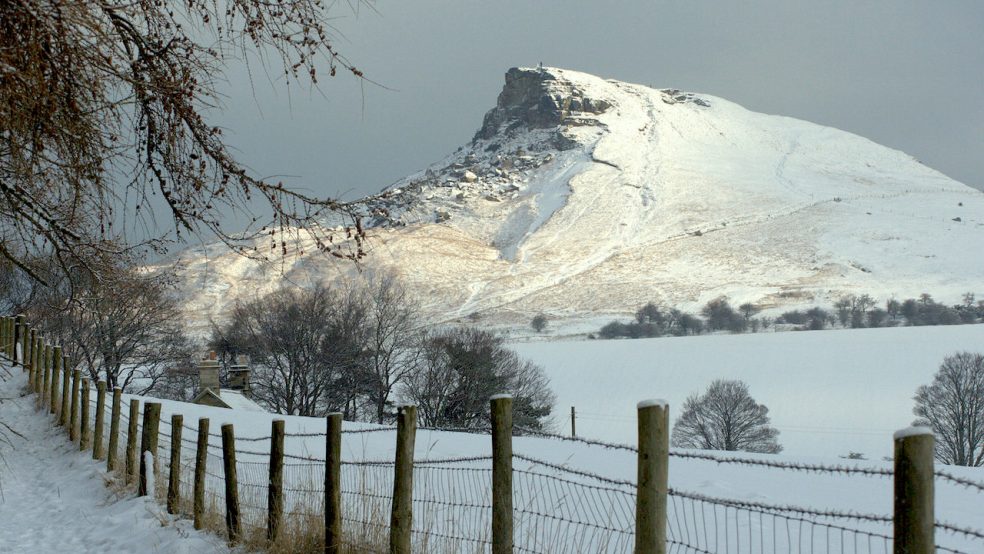
Roseberry Topping
Roseberry looked good this morning. A fresh covering of overnight snow.
-
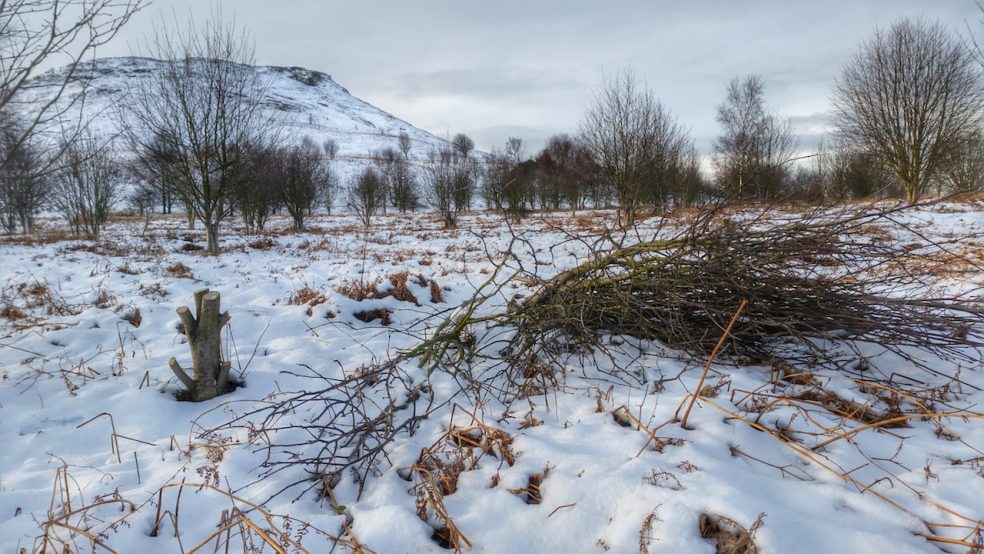
Land Management on the Slopes of Roseberry
The self seeded rowan and silver birch are being thinned by the National Trust who own the hill. I was amazed that native British trees should be cut down but was told that management is needed to create semi open woodland which is better for such species as the Willow Warbler. The cut branches are piled up to…
-
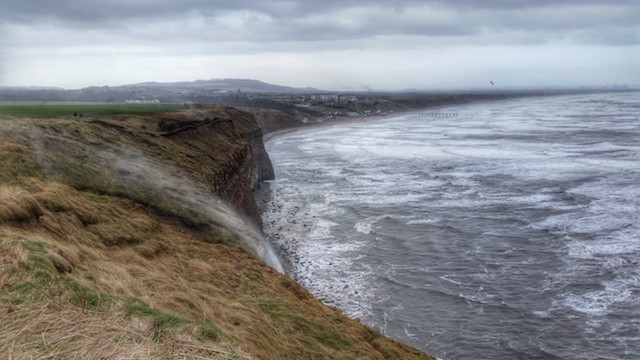
Cranedale Spout
With my feet still thawing out from yesterday I headed to Saltburn in search of sun and surf. I found plenty of surf. It was a bit breezy. But no snow. Cranedale Spout is a stream which tumbles down Saltburn Scar on to beach. Heading back to the town from Huntcliff the onshore wind was blowing the stream back up…
-
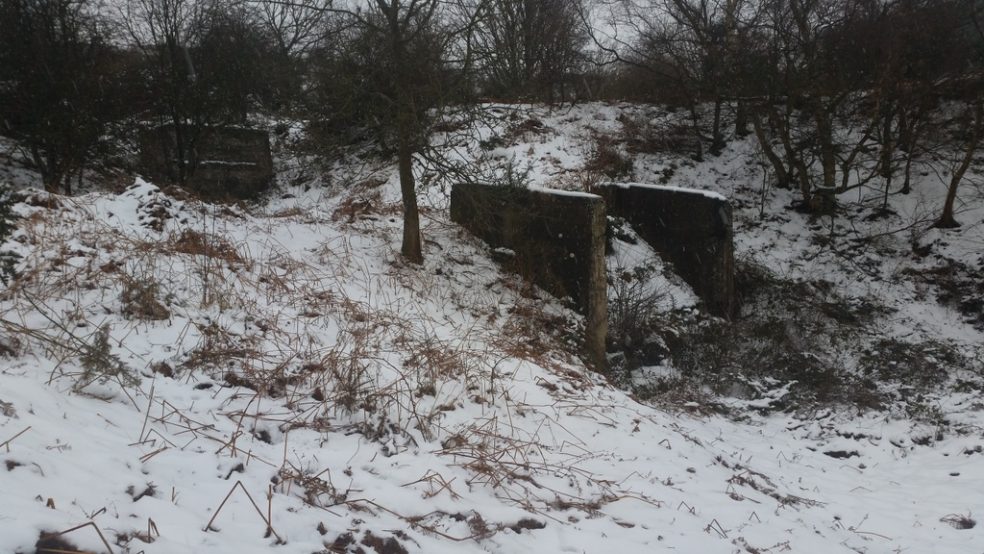
Ayton Banks Ironstone Mine
Of the three ironstone mines in the Great Ayton area, Ayton Banks Mine had the most difficult access. An aerial cableway had to be constructed to carry the ore the 1½ miles down to the North Eastern Railway. The mine was in operation for only sixteen years, from 1910 to 1926. First by the Tees Furnace Company then Burton & Sons.…
-
Source of the Leven
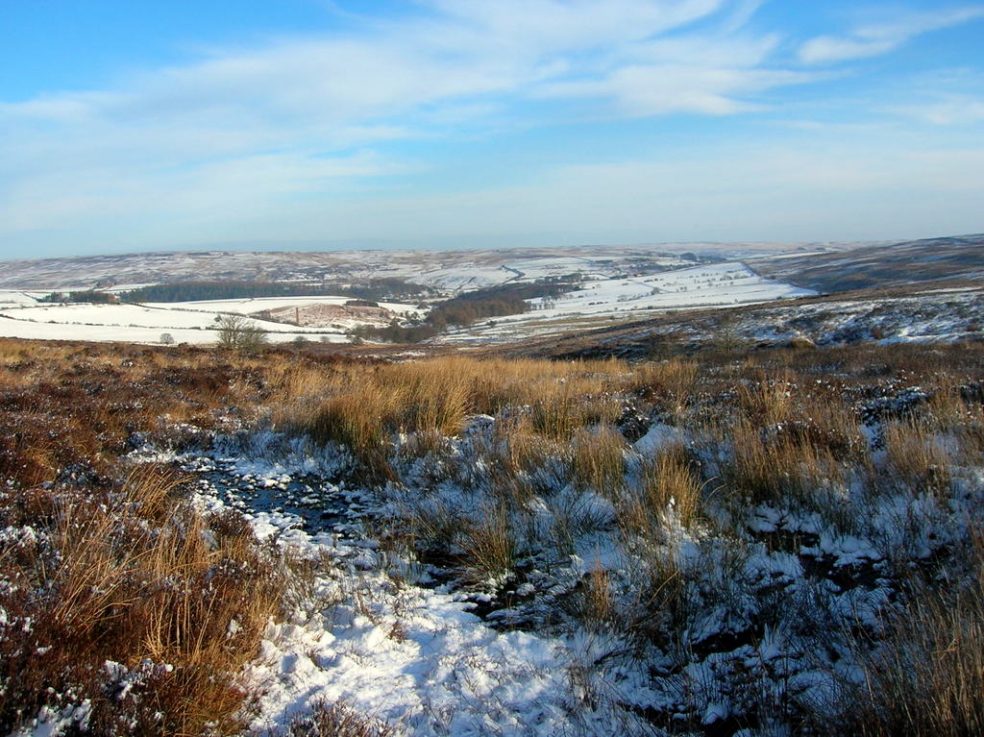
Went searching for the spring marked on the OS map as the Source of the Leven on Warren Moor. This is the highest point water was flowing. Behind me was 50m of bog. The River Leven flows through the villages of Great Ayton, Stokesley and Hutton Rudby before discharging into the Tees just downstream of…
-
Wallington Hall
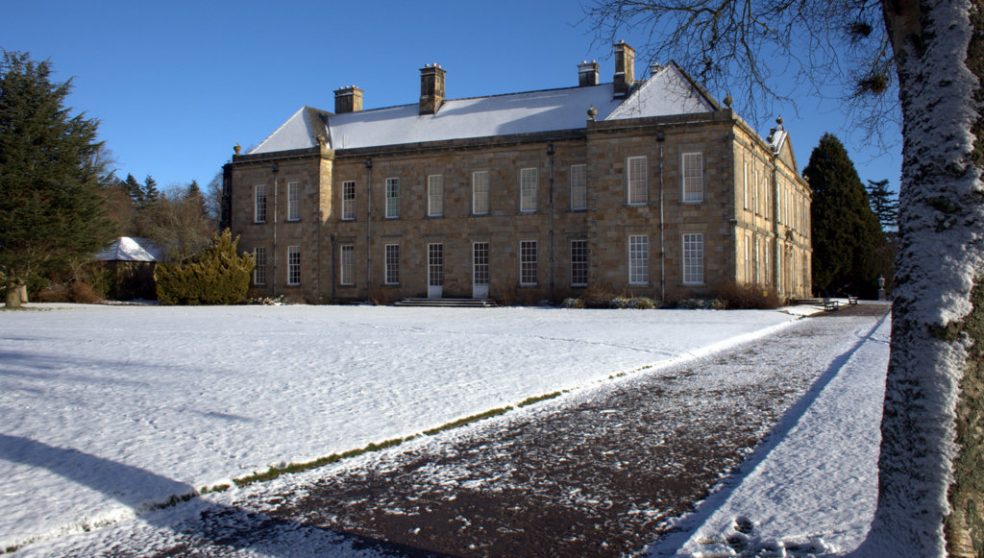
A National Trust property in Northumberland the first of its kind to be donated to the Trust.
-
Low Green, Great Ayton
-
Heartbreak Hill
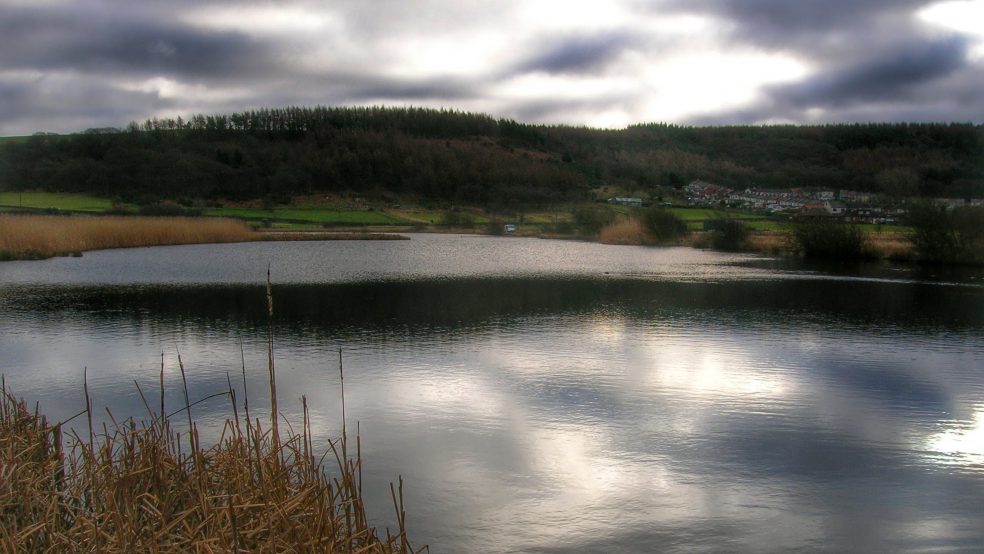
A dull, overcast day. Took a trip out to Slapewath to look at some fields known as Heartbreak Hill. Turned out the fields were fairly nondescript and not very photogenic but they do have a bit of history which is worth recounting. The fields, to the left of the row of ex-miners cottages of Margrove Park…
-
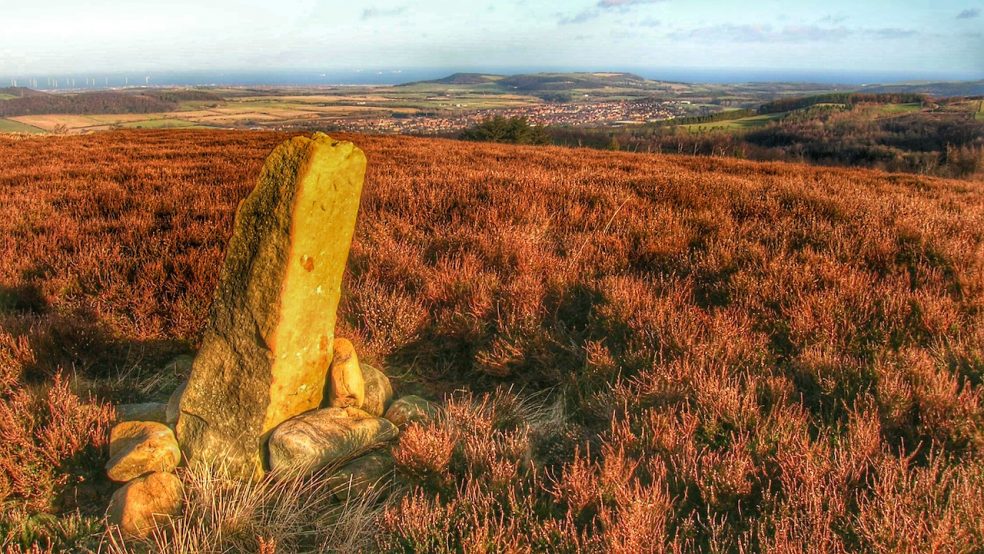
Boundary Stone, Newton Moor
With clear views to Guisborough and the North Sea beyond.
-
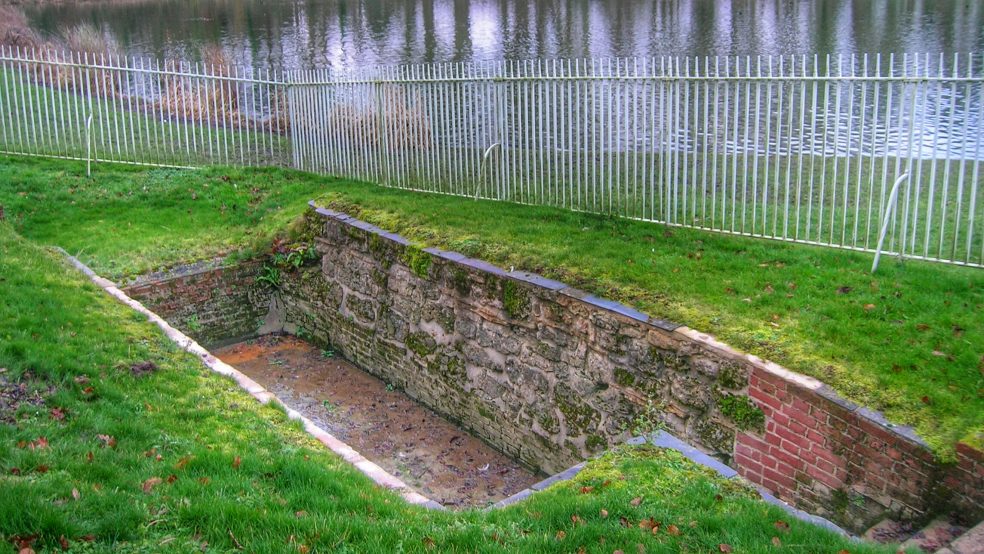
Plunge Pool at Lydiard Park
Cold bathing was fashionable in the 18c. George III was advised to do it by his doctors. It was said to cure madness, rickets, leprosy and asthma. This plunge pool at Lydiard Park dates from about 1820.