The Coast to Coast is now an official National Trail. Years of effort, a considerable sum of public money, and another grand ceremony. But one writer greets the opening carrying not a celebratory banner but a rather pointed question: Who, exactly, is it for?
Charlotte Ditchburn is happy to acknowledge that these routes bring people outdoors, support rural communities, and connect walkers to the land. Good things, all of them. But underneath her genuine warmth runs a cold and inconvenient logic. She was involved in consultations on behalf of The British Horse Society, pushed hard for a multi-user route, and watched the idea get quietly shelved. Her frustration is entirely earned and expressed with admirable restraint. She does not shout. She does not need to. She simply lines up the facts and leaves the reader to draw the obvious conclusion: that “national” is a rather grand word for a route that quietly forgets whole groups of citizens exist.
The piece is at its most powerful when it introduces Debbie North, who completed the route on a TerrainHopper alongside her partner Andy. Their journey proved that the barriers to disabled access are not physical but political. That is a damning sentence, and Ditchburn is right to put it plainly.
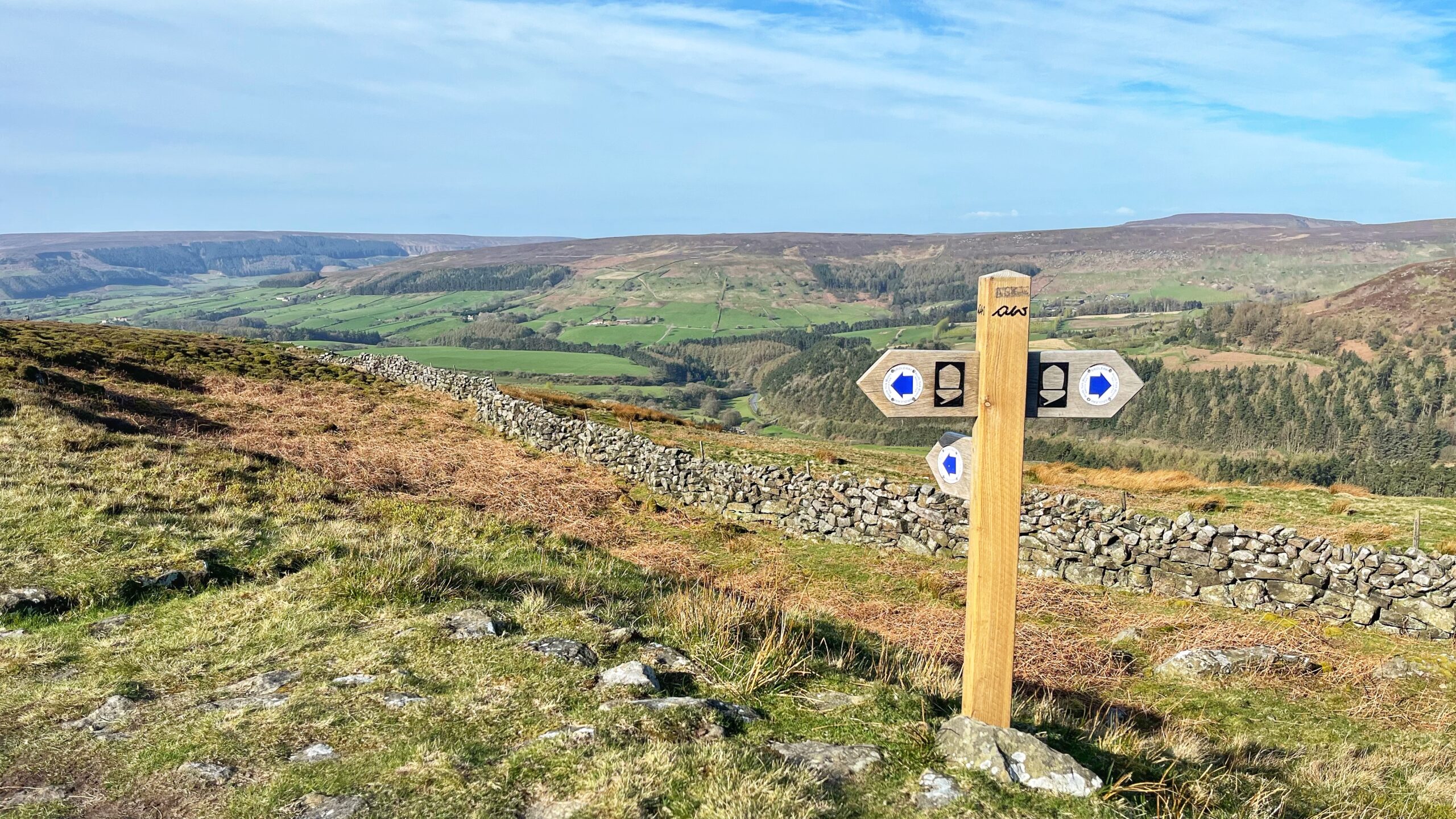
Her point about Wainwright is equally sharp. His route has been treated as sacred scripture, even though he himself encouraged walkers to wander freely. Using his ghost as an excuse for exclusion is taking considerable liberties with a dead man’s intentions — as anyone passing his initials on fingerposts such as this one on Carr Ridge might quietly reflect.
The article is lucid, fair, and quietly furious. It deserves to be read by every person who holds a budget and calls a trail “national.”
One reservation, however, is worth raising. Making a trail truly accessible for all will inevitably mean more infrastructure, and more infrastructure tends to attract those with no particular respect for the countryside or the rights of others. The off-road motorcyclist does not read access policy documents. He simply arrives. And with him goes the very feeling of being in nature that draws people outdoors in the first place.
Inclusion is right. But it is not without its costs.
Leave a Reply