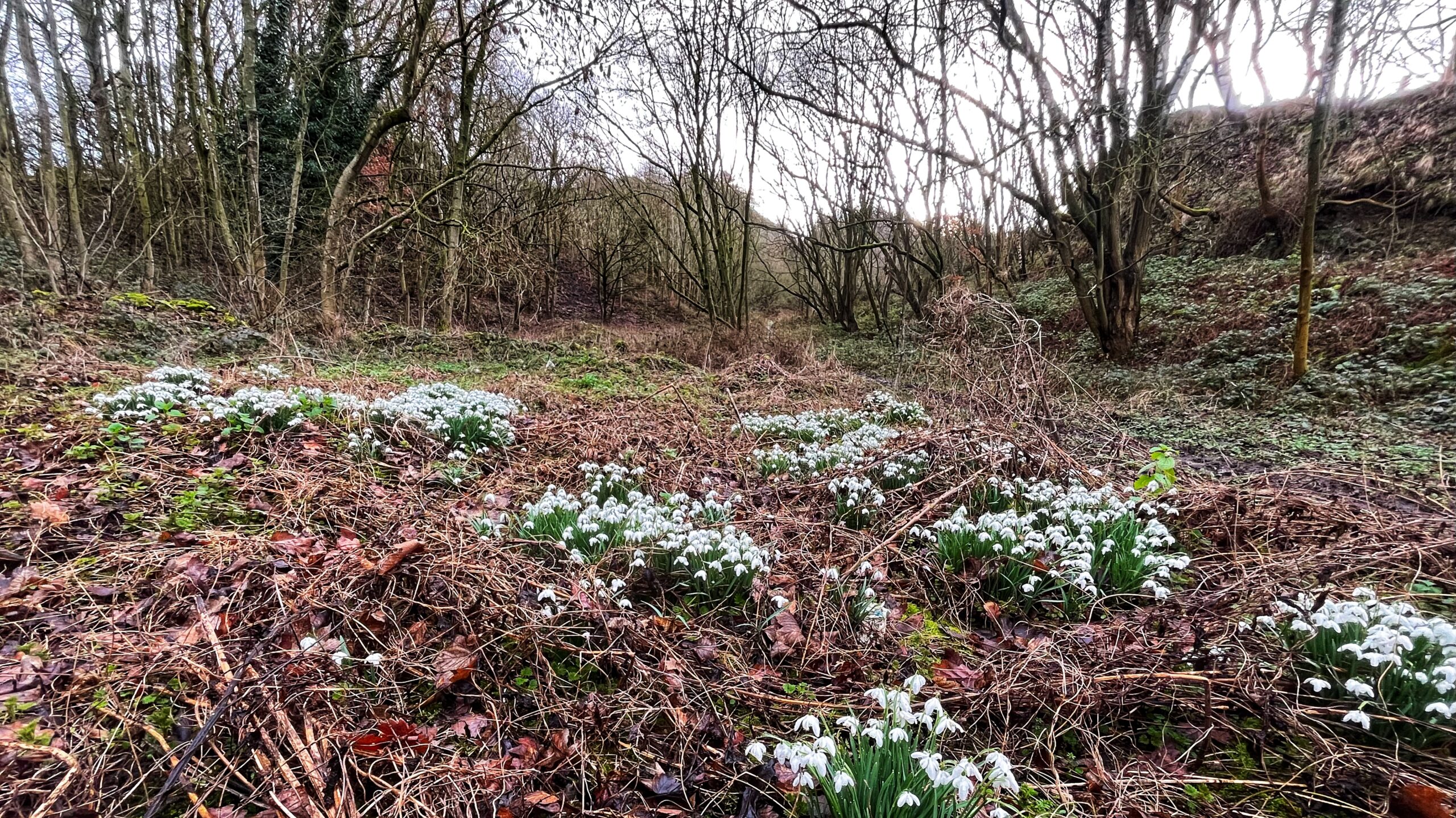
The signs are there for all to see. The frogs in the garden pond have woken, shaking off winter like old men rising from stiff chairs. Hazel catkins hang thick and yellow in the brief scraps of sunlight. A few brave daffodil buds test the air. The sun provides apricity, its setting creeps past five o’clock, and hope, stubborn as ever, returns by inches.
Spring is still clearing its throat. Yet the change is heard as much as seen. The robin, faithful through the bleak months, no longer sings alone. Tits and finches finch add their delicate melodies. After weeks of damp stillness, the countryside sounds as if someone has finally switched the power back on.
The chorus will thicken. The chiffchaff’s neat refrain will arrive as a March tonic and by June will have become an earworm. Whitethroats will rattle, thrushes will delight, and the blackbird will pour out rich fluted notes that will stop you mid-step. Once unnoticed, birdsong becomes impossible to ignore.
On the woodland floor, snowdrops are in bloom. These “February Fair-Maids”, push through nettles, leaf litter and stones, white heads bowed but determined1Wright, Elizabeth Mary. Rustic Speech and Folk Lore. 1913.. Brought to Britain centuries ago and grown in gardens by 1597, they slipped the fence and made themselves at home. Now they appear across most of the country, spreading mainly by dividing bulbs rather than seed2Mabey, Richard. “Flora Britannica”. Reed International Books Ltd. 1996..
They are tougher than they look. Hardened leaf tips pierce frozen ground. Their sap acts as antifreeze. On bitter mornings they collapse, only to rise again when warmth returns. Inside these modest flowers lies galanthamine, a compound used to treat Alzheimer’s disease. Small plants, quiet miracles, carrying spring on their backs while winter still lingers.
- 1Wright, Elizabeth Mary. Rustic Speech and Folk Lore. 1913.
- 2Mabey, Richard. “Flora Britannica”. Reed International Books Ltd. 1996.


Leave a Reply