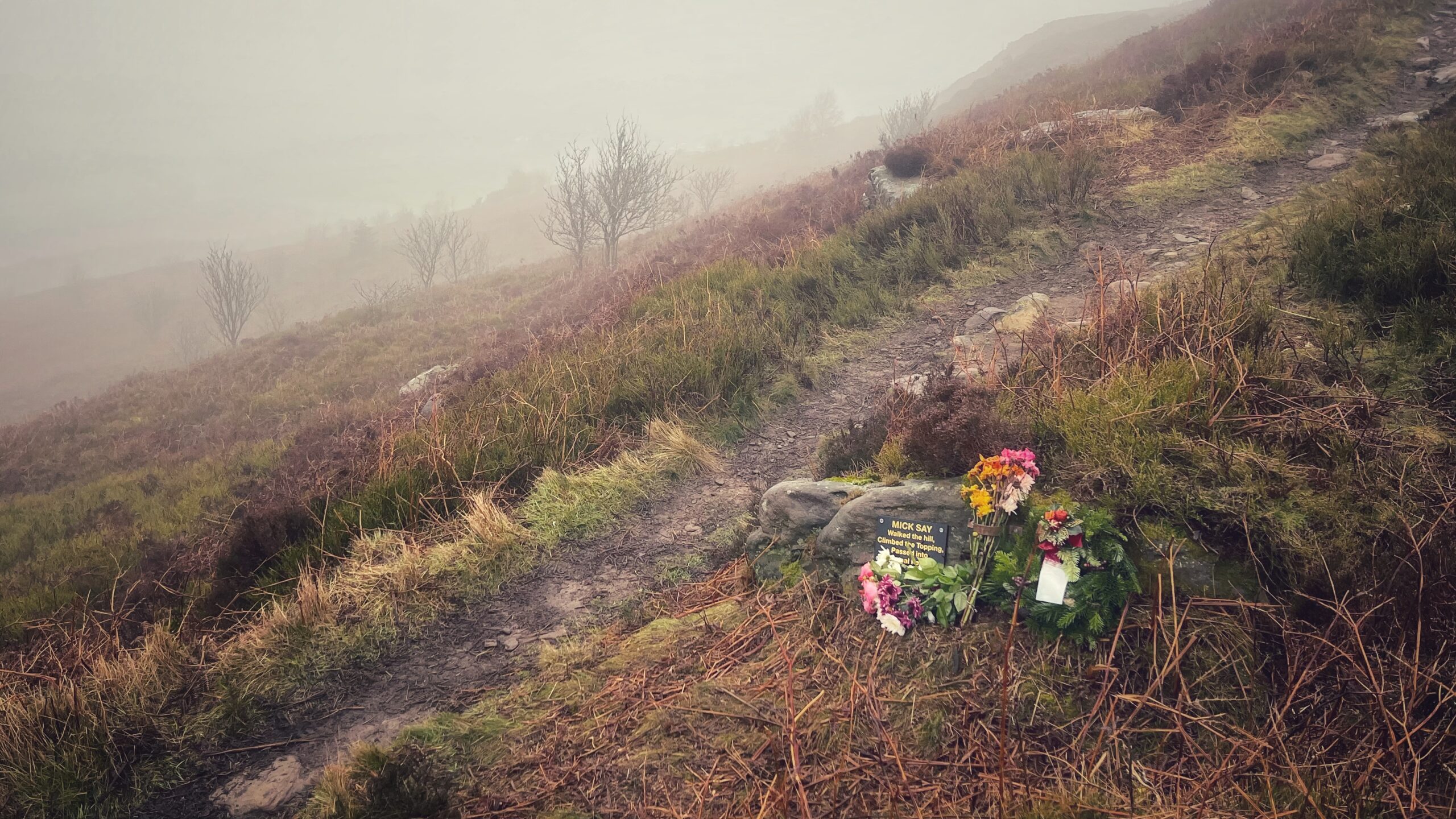
In medieval churches, the pauper’s voice often survives with their graffiti remembering loved-ones on the walls and pews — essential memorials for the 95% of society who couldn’t afford headstones1Champion, M. (2015). Medieval Graffiti: The Lost Voices of England’s Churches. https://aeon.co/essays/medieval-graffiti-brings-a-new-understanding-of-the-past. Today, this vernacular memorialisation has turned toxic. In the North York Moors, ironically beneath the monument to Capt. Cook, a sandstone crag—naturally beautiful with centuries of weathering and lichen — has recently been drilled and screwed to hold a plaque and metal flower holder. This isn’t just leaving a mark; it’s inflicting a wound that is obtrusive and pierces the National Park’s very skin.
While ancient scratchings was a survival of identity for the poor, these modern memorials are a form of despondent proliferation. We are colonising the natural landscape with metal and plastic, consuming the very beauty spots we claim to honour. It’s the ultimate irony: destroying the view to remember the person who loved it.
Do we really have to choose between ephemeral monuments—unsightly piles of ashes that will, no doubt, eventually disperse through wind and rain—and this invasive permanence? Drilling creates a gateway for decay. By exposing the stone’s internal cements to moisture and freeze/thaw action, we trigger spalling (irreversible surface flaking), effectively killing the natural canvas for a temporary human grief.
These acts trigger a broken windows effect. A single unauthorised plaque signals neglect, emboldening others in a competitive landscape of memory. It transforms a National Park from a protected sanctuary into a lawless site the authorities have seemingly abandoned.
Does our ego-driven need for permanence justify a permanent scar on the landscape? We must decide: does your right for your loved ones to be remembered outweigh nature’s right to remain wild?
- 1Champion, M. (2015). Medieval Graffiti: The Lost Voices of England’s Churches. https://aeon.co/essays/medieval-graffiti-brings-a-new-understanding-of-the-past


Leave a Reply