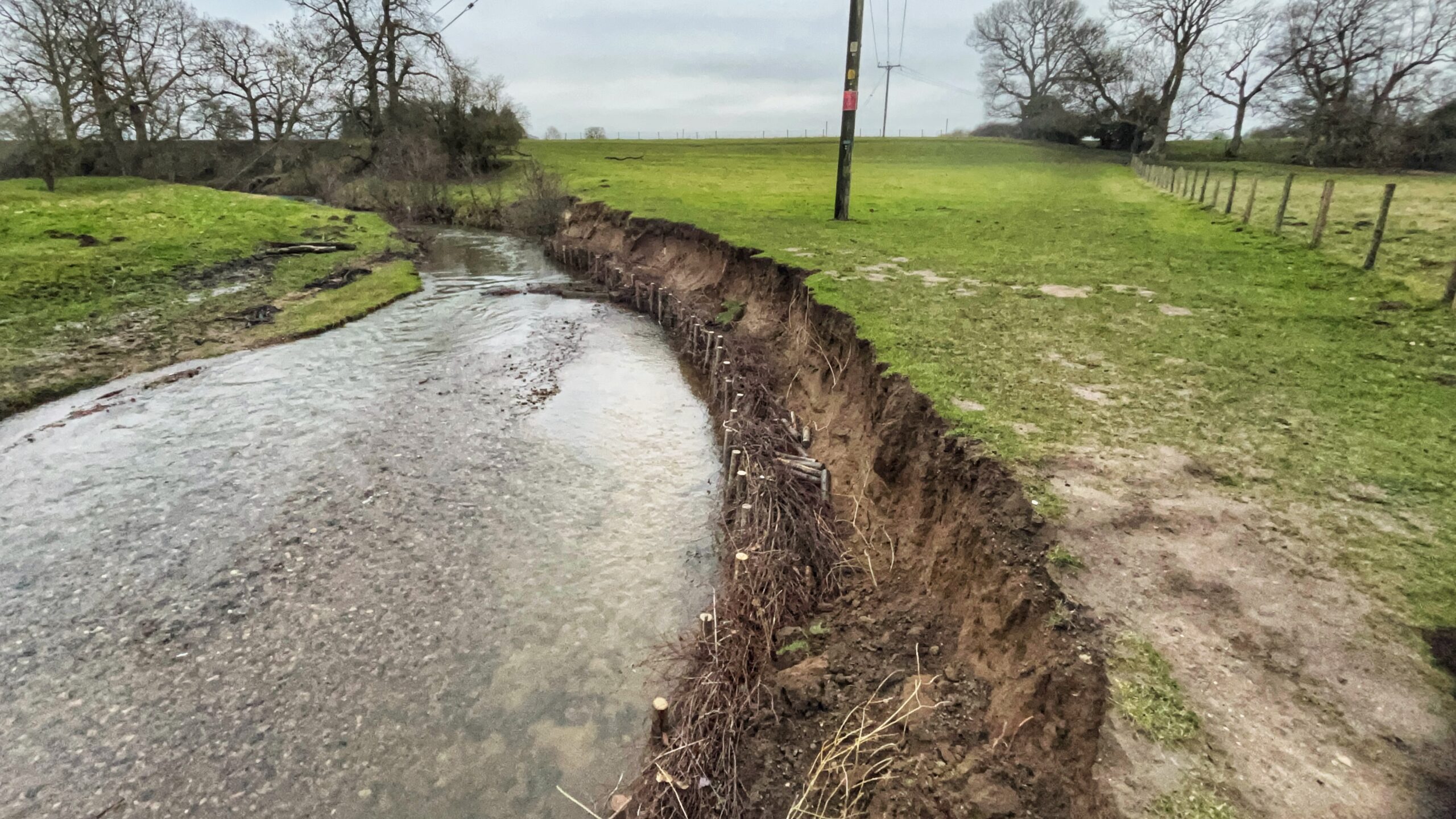
I have been fretting about the riverbank by Holmes Bridge at Little Ayton for a while now, the way you fret about a loose tooth. Each flood leaves that electricity pole looking more exposed, more hopeful of a swim. And every time the river rises, the public footpath from the bridge looks closer to stepping on to an island. It sits on one of my regular routes out of the village, so I get to worry about it often.
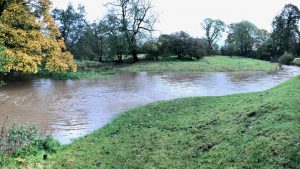
North Yorkshire Council must have been worrying too. Toward the end of last year, in what felt like a last roll of the dice, they asked the Tees Rivers Trust if anything could be done to stop the bank giving up entirely. Enter the Trust, sweeping in like International Rescue, only with less thunder and more willow. They have carried out some modest, low-cost, soft engineering to slow the erosion rather than arm-wrestle the river into submission.
At the foot of the bank, brash bundling has been laid and pinned down with willow staves driven into the riverbed. It does two useful things. It breaks the force of the water, especially when the river is charging through in flood, and it encourages sediment to drop out of the flow and lodge itself among the twigs. Bit by bit, the bank should start to rebuild its own backbone.
Willow whips have also been planted along the bank in the hope that they will take root and knit the soil together. That should give longer-term protection. Upstream, and tucked discreetly below the waterline, two hefty logs have been anchored to the bed with 1.5 metre rebar pins. Their job is to nudge the current away from the vulnerable toe of the bank and back toward the gravel bed, like a polite but firm usher.
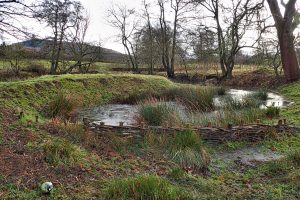
This stretch of the Leven flows through banks cut into glacial drift, in a fairly flat landscape with little appetite for drama. Meandering is what rivers like this do. The current finds a weak spot, digs a hollow, and gets redirected. In flood, the fast water undercuts the clay and gravel until chunks slump into the channel and the river spreads itself wider. Sediment then drops out where the flow slows, building shelves of sand and shingle. Given time, the river may slice through the narrow neck between two bends, abandon a loop, and leave behind a quiet backwater of ponds and marsh. The classic ox-bow. In neat Blue Peter fashion, there is one on the opposite bank that Mother Nature has completed and humans later tweaked with a leaky dam to act as a flood catchment pond. It’s still there, doing its job.
At this morning’s “normal” river level, the new works appear to be earning their keep. The current does seem to have been pushed away from the bank, which is encouraging. The real test, of course, will come with the next flood.
Looking further ahead, the willows may grow into large trees, and large trees have a habit of asking awkward questions of unstable banks. To keep everything upright and civil, they will need regular coppicing so their energy stays in their roots rather than their bulk. A quiet note for the future, assuming the river behaves itself until then.
Leave a Reply