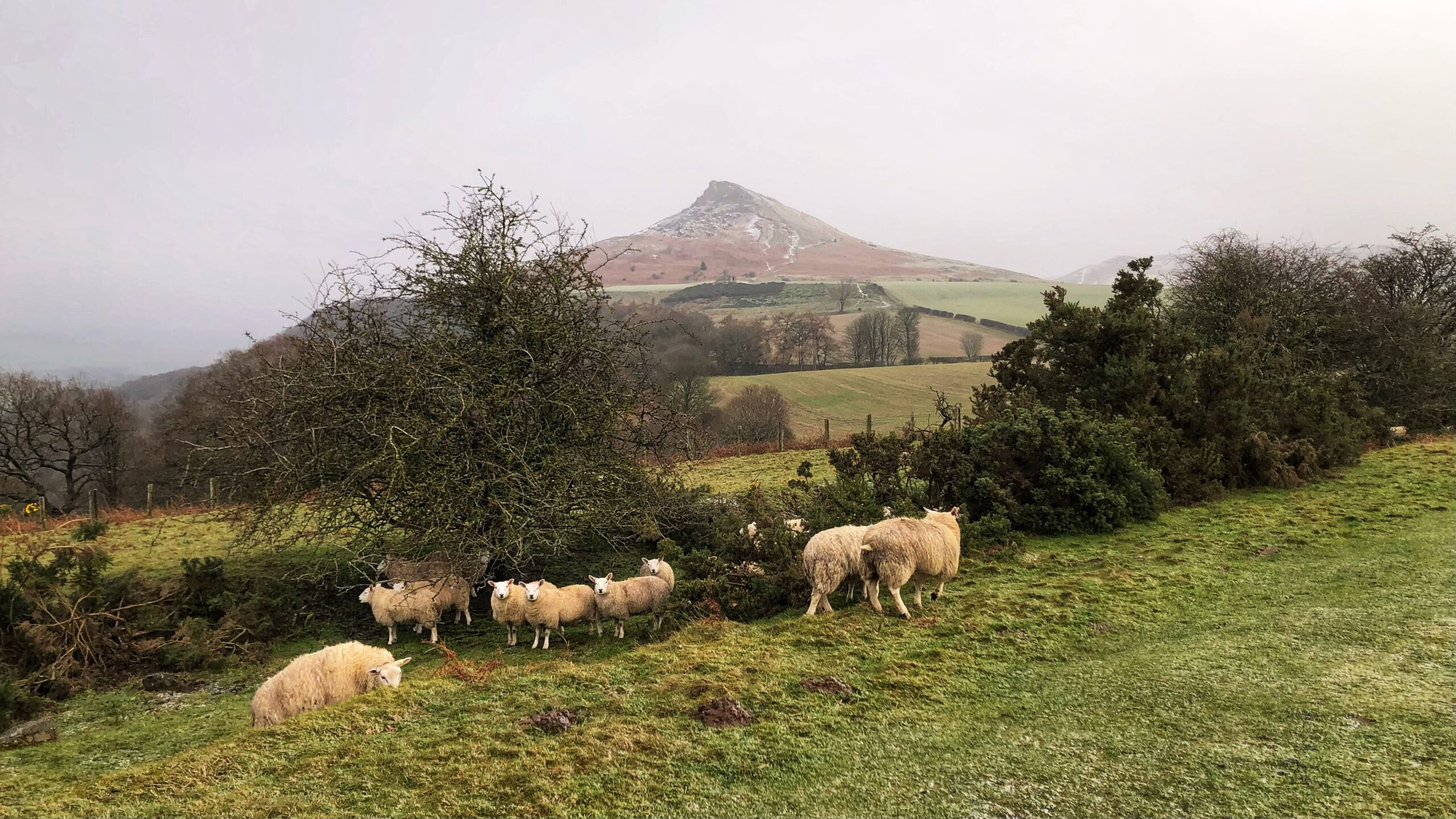
I cannot quite tell whether these sheep huddling under the gorse to dodge the sleet are tough old “moor” sheep or soft “lowland” types, but either way they carry the usual reputation. Sheep, like cows, belch methane, methane warms the planet, and that is that. Or so we thought. A study with the esoteric name “Forage for CH4nge”, carried out in the Yorkshire Dales, suggests the story is less black and white1Moorland grazing cuts sheep methane and carbon emissions, study finds. FarmingUK Team. 27 January 2026. https://www.farminguk.com/news/moorland-grazing-cuts-sheep-methane-and-carbon-emissions-study-finds_67911.html. Where sheep live, and what sort of sheep they are, turns out to matter rather a lot. Nature, it seems, still knows a few tricks.
The heart of the study is simple enough. Sheep grazing wild, unimproved moorland, full of heather and bilberry, gave off far less methane and carbon dioxide. Move the same animals onto herb-rich pasture or neatly “improved” grassland, fertilised and reseeded to look busy and productive, and emissions rose. The irony is hard to miss. The land we polish and tinker with turns out to be worse for the climate than the land we leave well alone.
One assumes, sensibly, that sheep stuffed with winter turnips or swedes were kept out of the figures, as their contribution would have been less science and more brass band.
The researchers compared native Swaledale sheep with larger Texel-cross animals bred for output rather than place. The smaller Swaledales came out better overall, producing less methane and less carbon dioxide. Adjust for body weight and the methane gap narrows, but the carbon dioxide advantage remains. The lesson is not subtle. Animals shaped by a landscape tend to fit it better than animals dropped in by catalogue.
As the lead farmer in the study noted:
By working with native breeds like the Swaledale, we can farm these sensitive landscapes in a way that protects them for future generations.
The study also widened the lens to the land itself. Healthy upland soils, well aired and lightly grazed, can act as “methane sinks”, quietly pulling greenhouse gases out of the sky. The balance sheet, then, is not just about sheep and their habits, but about the condition of the ground beneath their feet.
Farming, like most things, is messier than it looks from a distance. This work shows that progress does not always mean more inputs, bigger animals, or tidier fields. Sometimes it means native breeds, rough land, and letting ecosystems get on with the job. Efficiency, in this light, looks less like control and more like restraint. Nature has been doing this a long time, and it rarely rewards those who ignore the manual.
- 1Moorland grazing cuts sheep methane and carbon emissions, study finds. FarmingUK Team. 27 January 2026. https://www.farminguk.com/news/moorland-grazing-cuts-sheep-methane-and-carbon-emissions-study-finds_67911.html
Leave a Reply