About twenty minutes today went on scrubbing the graffiti off the rock faces, as I posted yesterday. Fortunately, it was water-based. They are not perfect, their shadow still lingers if you squint. Still, it is a sight better than the mess that was there before. Progress, slow and steady, like pushing treacle uphill.
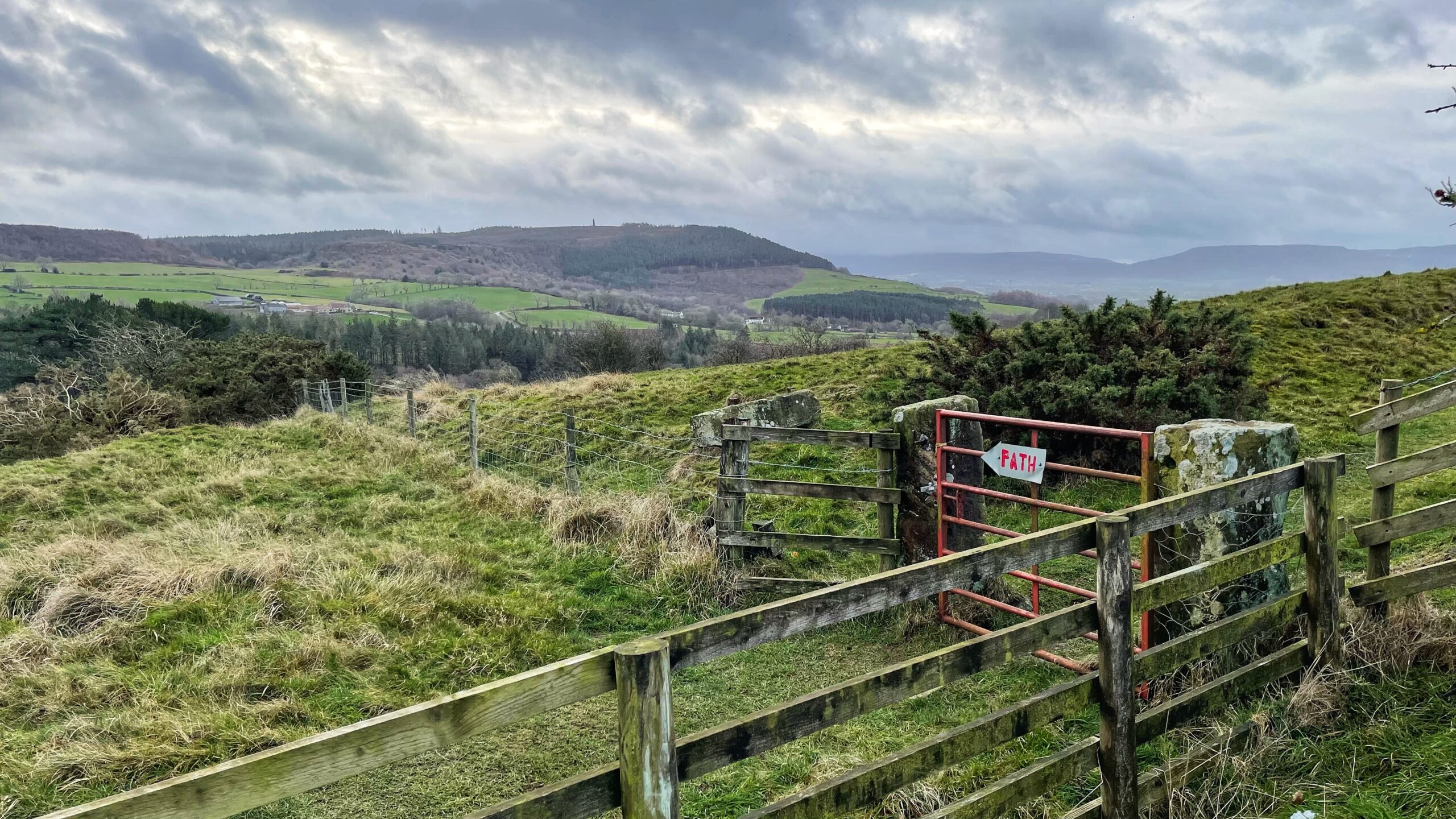
On the walk back, a sign on Aireyholme Lane brought back a familiar itch. To my eye, it points left, either before the gate or after it. The pedant in me refuses to let that pass. The correct route, the Public Bridleway, is straight ahead. Incidentally, the farm track that everyone uses is not officially a Right-of-Way at all. Close, but not close enough.
This sign feels naively wrong. Others manage to be “technically correct” while also being carefully misleading. A sign saying “Private Road No HGVs” may be true for vehicles, yet it leaves out the small detail that the way is still a public footpath. Supporters of the “Right to Roam” have a point when they say signage creates a hostile landscape, full of orders and finger wagging, instead of clear and helpful guidance.
Signs often work as smoke and mirrors. Landowners put up “Trespassers will be prosecuted” even though trespass is usually not a criminal matter unless damage is done. The aim is simple enough, scare people away from land they are allowed to use. In monied or gentrified areas, Public Right of Way signs have a habit of vanishing, as if by magic, while notices like “You are being watched—CCTV” appear to send walkers packing sharpish.
I know these paths well, perhaps too well, and here in the National Park it does not feel too grim. Still, trying to find your way in unfamiliar countryside using only signs would be like doing a jigsaw with half the pieces missing, while the box lid has been swapped for a large “Keep Out” notice. A fine way to spoil a good walk.
Best be safe and take a map.
Leave a Reply