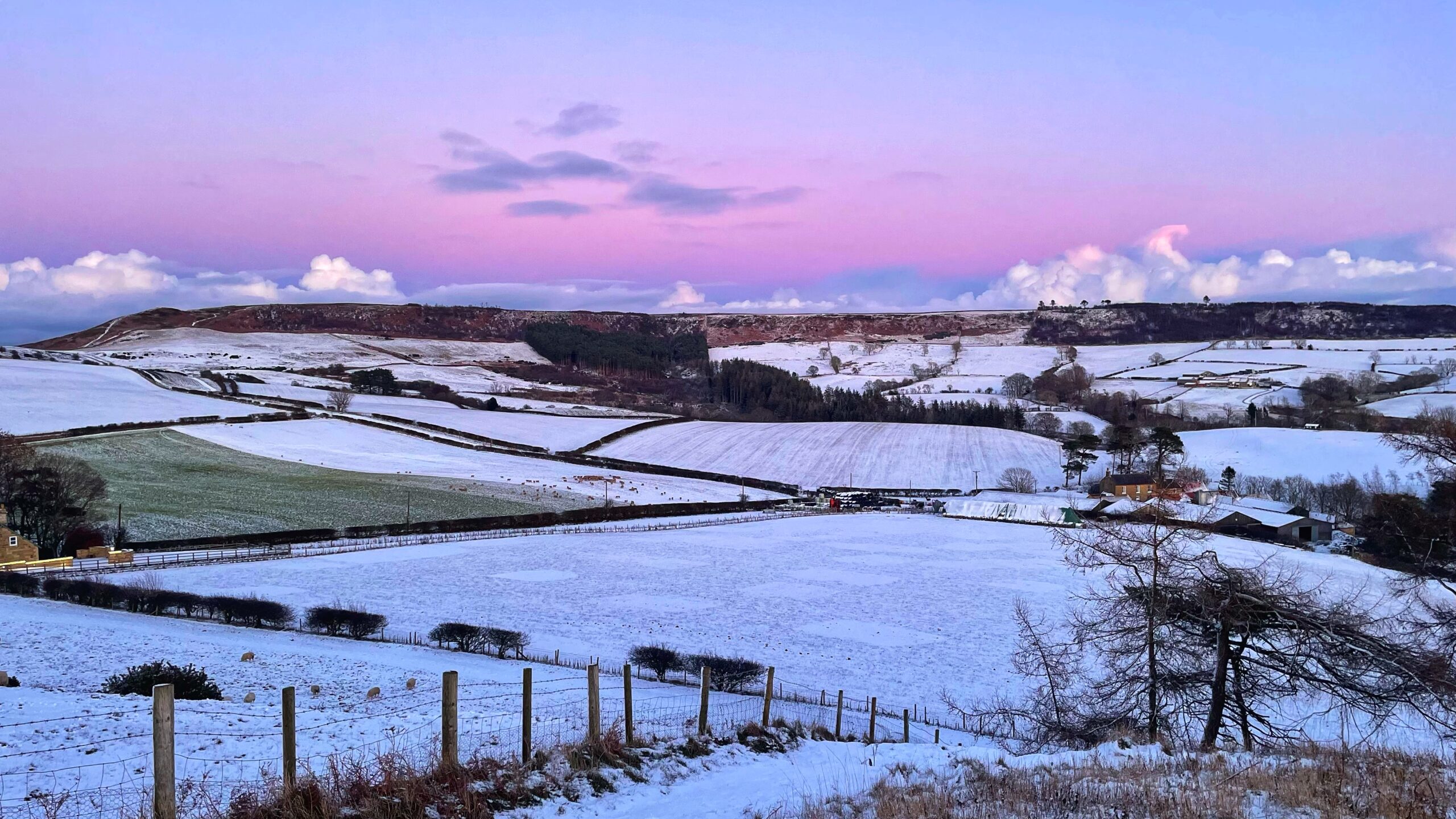
I came across an article the other day about the Belt of Venus. It is one of those quiet marvels the sky puts on without fuss, turning up often enough, yet missed by most people because they are too busy staring straight at the sunset or sunrise like moths at a bulb. The trick is that it appears on the opposite side of the sky.
So, with a promising sunset on the cards, I took myself off for a short walk up to Cliff Rigg. The hope was to catch this display, which I am sure I have seen before, but never properly noticed. Familiar things have a habit of slipping past when you are not paying attention.
The Belt of Venus shows itself as a soft band of colour just above the horizon during twilight. It can be pale pink, deep rose, or even purple, depending on the mood of the air and how much dust and muck it is carrying. When it behaves, it looks like a glowing ribbon laid gently across the sky, usually ten to twenty degrees above the horizon, directly opposite the hidden sun.
What is happening is simple enough. The sun has dipped below the horizon, but its light still travels through the atmosphere. The upper sky catches that light, while the lower sky sits in the shadow of the Earth itself. Blue light gets scattered away on its long journey, leaving behind warmer reds and pinks, like the last embers of a fire refusing to go out.
With a clear, flat horizon, the Belt should sit neatly above a darker blue band. That darker strip is the Earth’s shadow climbing into the sky, and the line between the two can be sharp and striking. Here on Cliff Rigg, the bulk of the Moors and a smear of distant cloud spoiled the full effect, which is typical. Nature rarely performs on cue.
The name comes from Venus, the Roman goddess of love and beauty, which feels fair enough given the gentle pink tones. Sky watchers in the early twentieth century wanted something more poetic than a technical label, and this fitted the bill. It helps that the planet Venus itself often appears nearby at twilight, shining away like it owns the place.
That neat link between goddess, planet, and glowing band of colour has kept the name alive for more than a hundred years. Not bad for something that most people never bother to turn around and look at.
Leave a Reply