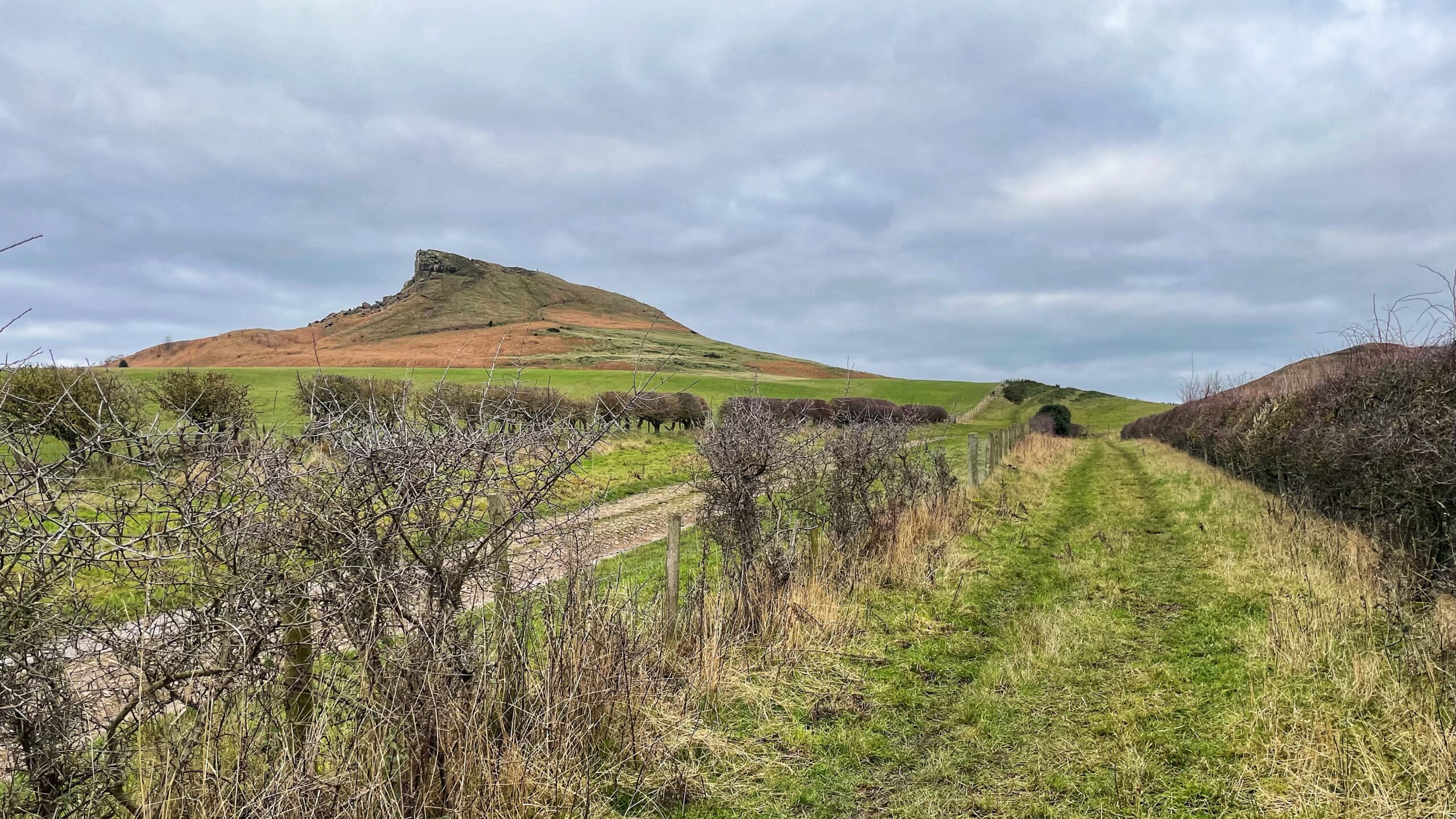
Christmas seems to arrive earlier every year. This Christmas Eve the summit was packed to the rafters. This view follows the line of the old ironstone tramway. Now labelled a Permissive Path, it runs alongside the Public Bridleway that is Aireyholme Lane and is largely ignored, so it feels like just a box-ticking exercise.
Long before Christmas muscled its way into the English winter, the Anglo-Saxons marked Mōdraniht, Old English for “Mothers’ Night”.
Mōdraniht was a pagan festival thought to have been held on the night we now call Christmas Eve. The eighth-century historian Bede tells us this night opened the Anglo-Saxon new year. He does not give us a neat list of activities, but he does note that people stayed awake all night carrying out what he sniffily called “superstitious” ceremonies.
The “Mothers” were not just the women of the household. They were likely powerful female spirits or deities, collective rather than personal, looming large in the background of everyday life.
The festival fell at the Winter Solstice, the low point of the year when darkness has the upper hand. Honouring the Mothers at this time made sense.
Protection mattered, with families seeking safety through winter when survival was no small thing. Fertility mattered too, asking the land to stir and do its job again come spring. Ancestry mattered as well, recognising the female line that kept families going when history was less than forgiving.
Today, Mōdraniht is observed by modern Pagans as a quiet and thoughtful opening to the Yule season, with an eye on family roots and the strength of women who came before.
Leave a Reply